
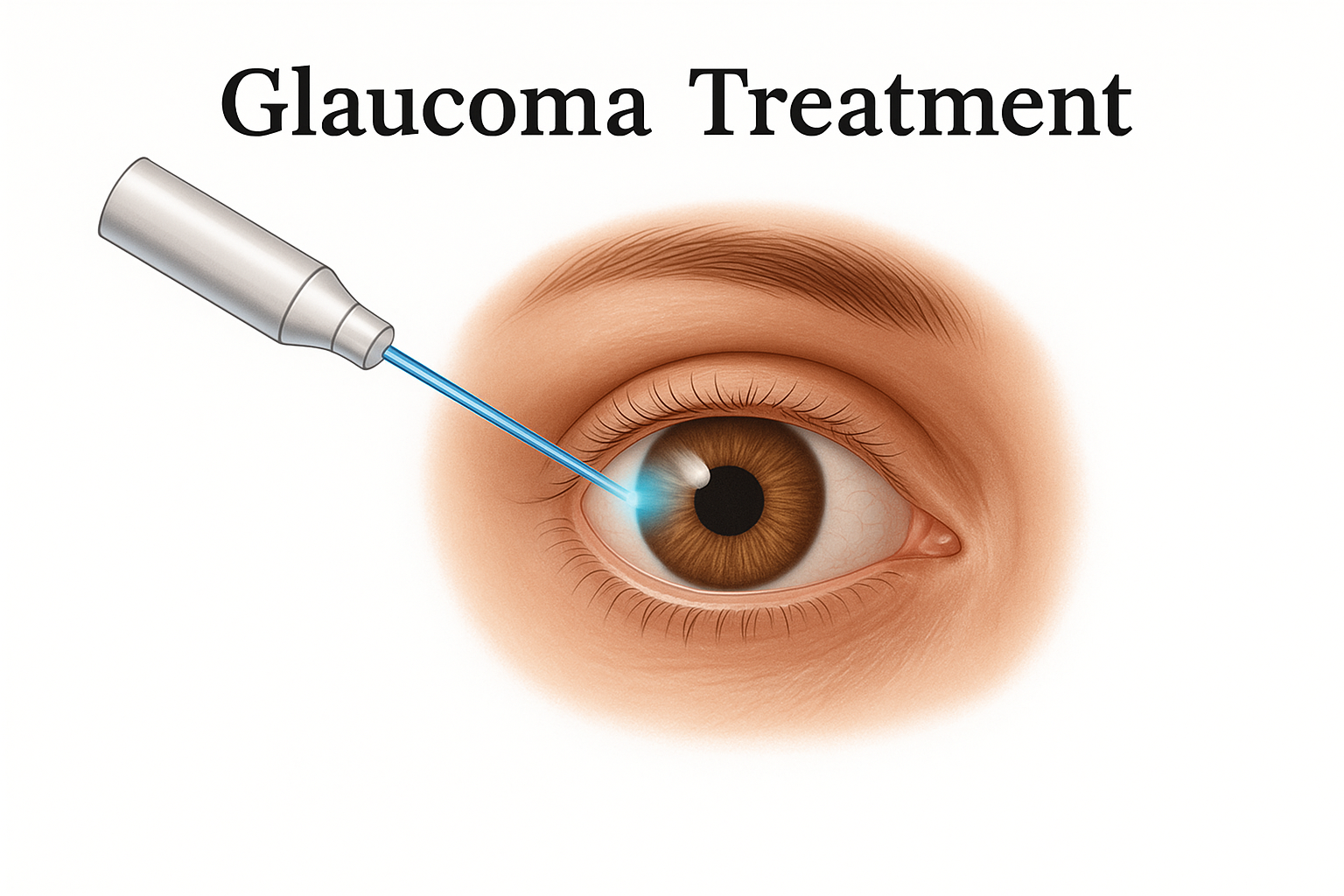
Glaucoma Treatment in Bathinda – Advanced Eye Care at Neo Polus Health Care
At Neo Polus Health Care, Bathinda, we provide comprehensive diagnosis, management, and treatment for glaucoma, a progressive eye disease that can cause irreversible vision loss if left untreated. Led by Dr. Karan Sarwal (M.S. Ophthalmology, 20+ years of experience), our Eye Care Department is equipped with advanced technology for early detection and personalized treatment.
Symptoms of Glaucoma (When to see a doctor)
Glaucoma is often called the "Silent Thief of Sight" because it has no early symptoms. However, urgent care is needed if you experience:
- Severe eye pain accompanied by headache.
- Seeing halos (rainbow-colored rings) around lights.
- Loss of peripheral (side) vision.
- Blurred vision or sudden redness in the eye.
Treatment Options at Neo Polus Hospital
Dr. Karan Sarwal offers a tiered approach to managing eye pressure:
- 1. Medical Therapy: Specialized eye drops to lower intraocular pressure.
- 2. Laser Treatment: Advanced YAG Laser Iridotomy (LPI) to improve fluid drainage.
- 3. Surgery: Trabeculectomy (filtration surgery) for advanced cases to create a new drainage path.
What is Glaucoma?
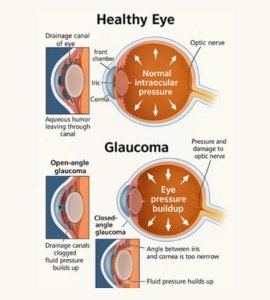
Glaucoma is a group of eye conditions where increased intraocular pressure (IOP) damages the optic nerve, leading to gradual vision loss. It often develops silently, with few or no symptoms in the early stages, making early detection critical.
Common symptoms may include:
 Blurred or hazy vision
- Loss of peripheral vision
- Eye pain or pressure
- Headaches and difficulty seeing at night
Types of Glaucoma We Treat
- Open-Angle Glaucoma – Most common, caused by slow drainage of eye fluid.
- Angle-Closure Glaucoma – Sudden increase in eye pressure, requiring urgent care.
- Normal-Tension Glaucoma – Optic nerve damage even with normal eye pressure.
- Secondary Glaucoma – Caused by injury, diabetes, or other eye conditions.
- Congenital Glaucoma – Rare but serious, present in infants or children.
Facilities & Technology for Glaucoma Care
At Neo Polus Health Care, we use world-class diagnostic and treatment technology for accurate results:
- Visual Field Testing – Detects peripheral vision loss early
- OCT (Optical Coherence Tomography) – Detailed imaging of optic nerve & retinal nerve fiber layer
- Applanation & Non-Contact Tonometry – Precise measurement of intraocular pressure
- Gonioscopy – Examining eye drainage angle to classify glaucoma type
- Fundus Photography – High-resolution optic nerve imaging for monitoring disease progression
- CCT (Central Corneal Thickness Measurement) – Determines glaucoma risk & treatment suitability
Glaucoma Treatment Options in Bathinda
- 👓 Medication – Eye drops to reduce intraocular pressure
- 🔬 Laser Therapy – Selective laser trabeculoplasty and iridotomy for fluid drainage improvement
- 👁 Surgery – Trabeculectomy, drainage implants, and minimally invasive glaucoma surgery (MIGS) for advanced cases
- 💙 Long-Term Management – Regular monitoring to prevent vision loss
Why Choose Neo Polus Health Care for Glaucoma Treatment?
- 👨⚕️ Experienced ophthalmologist with 20+ years of expertise
- 🔬 State-of-the-art glaucoma testing and monitoring equipment
- 👁 Comprehensive eye care from diagnosis to long-term management
- 📍 Recognized as one of the best eye hospitals in Bathinda for glaucoma care
Why Choose Neo Polus for Glaucoma Care?
- Early Detection Technology: We use advanced OCT and Perimetry to catch vision loss before it starts.
- Experienced Specialist: Dr. Karan Sarwal has 20+ years of experience in managing complex glaucoma cases.
- Laser & Surgical Options: From non-invasive SLT laser to Trabeculectomy surgery under one roof.
- Lifetime Monitoring: Glaucoma needs lifelong care. We offer structured follow-up plans.
Frequently Asked Questions
Protect your vision with timely glaucoma screening and treatment at Neo Polus Health Care.
No, glaucoma cannot be cured, but early diagnosis and proper treatment can control it and prevent vision loss.
People above 40, those with family history, diabetes, hypertension, or high eye pressure are at higher risk.
Adults over 40 should undergo a comprehensive eye exam every 1–2 years, or more frequently if risk factors exist.
Yes, modern glaucoma surgeries and laser treatments are safe and effective when performed by an experienced ophthalmologist.